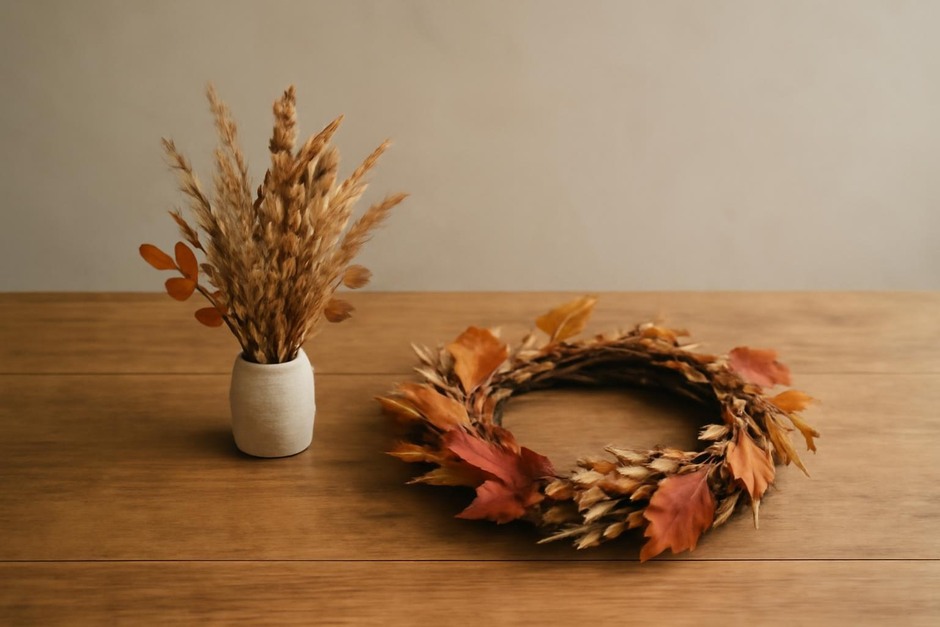
Two Ways to Bring Autumn Indoors: Dried-Botanical Arrangements vs. Crafted Wreaths
Autumn invites a softer, textured palette into the home: browned grasses, seedheads, dried herbs, and curled leaves. Dried botanicals keep that mood long after fresh bouquets fade, and they suit a range of tastes and schedules. Below are two approachable ways to bring autumn inside—minimal natural arrangements and crafted wreaths—followed by clear guidance to help you decide which fits your home and life this season.
Approach 1: Minimal Natural Arrangements
What it is: A loose, informal display of dried stems and seedheads placed in a simple vessel. Think a single variety or a small handful of complementary textures arranged without much manipulation.
Materials and basic steps:
- Collect or buy a few stems—dried grasses, hydrangea blooms left to age, lavender, or millet work well.
- Trim stems to varied lengths and choose a narrow-necked vase or bottle that supports them upright.
- Group similar textures (all airy grasses, all seedpods) or mix two contrasting types for a composed look.
- Place in a low-traffic spot away from direct sun and moisture to preserve color and shape.
Why choose this approach:
- Speed: Arrangements take minutes to compose and swap out.
- Low cost: Uses few stems and inexpensive vessels; ideal for foraging.
- Flexible scale: Works on mantels, bedside tables, or clustered on a shelf.
- Casual aesthetic: Feels lived-in and quiet; fits minimalist and rustic interiors alike.
Approach 2: Crafted Wreaths
What it is: A composed circular centerpiece made from woven or wired dried materials. Wreaths can be loose and organic or dense and structured; they become a statement piece for doors, tables, or walls.
Materials and basic steps:
- Choose a base: a grapevine hoop, straw ring, or wire frame.
- Gather a mix of dried botanicals—small branches, bay leaves, eucalyptus, berries, and seedheads for contrast.
- Attach materials in small bundles with floral wire or twine, overlapping to hide the base as you go around the frame.
- Finish with a focal element (a cluster of berries or a ribbon) and trim stray stems for a neat edge.
Why choose this approach:
- Decorative impact: Wreaths are purpose-built focal points that read well from a distance.
- Longevity: Properly dried and stored, wreaths can last through the season and beyond.
- Customization: Dense, layered wreaths allow more color and shape control than loose arrangements.
- Giftable: A handmade wreath is a portable, finished object suited to giving.
Comparing maintenance, cost, and time
- Maintenance: Minimal arrangements need occasional dusting and can shed; wreaths are more stable but should be handled gently when hung or stored.
- Cost: Simple arrangements are cheaper up front; wreaths may use more materials and take longer, increasing their perceived value.
- Time: Arrangements are fast—often under 15 minutes. Wreaths take 30–90 minutes depending on complexity.
How to choose between them
Choose by answering a few practical questions about your space and season.
- How much time do you want to spend? If your schedule is tight or you prefer quick updates, opt for minimal arrangements. They’re easy to refresh and encourage seasonal experimentation.
- Do you want a focal object? If a strong, visible seasonal statement is your goal—on a front door, over a mantel, or as a table centerpiece—a wreath delivers more presence.
- Do you enjoy making things? Wreaths reward slow, hands-on crafting. If you find the process pleasurable, the making becomes part of the pastime.
- How permanent do you want the decor to be? For something you’ll reuse year after year, invest time in a sturdy wreath. For ephemeral seasonal mood, choose arrangements you can compost or redecorate frequently.
- Storage and space: Wreaths need safe, flat storage to keep shape; if storage is limited, stick with small vases and arrangements that pack away more compactly.
Final tip: mix approaches if you like both. A small wreath above the hearth framed by several minimal vases creates layered interest without much extra work. Whatever you choose, aim for locally sourced or foraged materials when possible—this keeps the look authentic, sustainable, and tied to the season in your own backyard.